


Ten years ago, spotting an electric car was similar to bumping into a celebrity: It was surprising, the appearance was unconventional, you weren’t sure what to expect from the encounter, and you couldn’t say if or when it would ever happen again. In 2026, though, seeing an electric car, or even an electric truck, is far less of an event and more of an expectation.
With the proliferation of electrification, you might have considered jumping on board and buying one yourself, but perhaps there are still some question marks about electric car maintenance on your mind. Will it have enough range for your lifestyle? How quickly can you get used to the different driving operations, and (perhaps most important of all) what does electric vehicle maintenance actually involve?
Do Electric Cars Require Less Maintenance Than Gas-Powered Cars?
The short answer is yes, but that’s a generalization, as specific EVs can still cost as much to maintain as certain gas-powered cars. Still, you should expect an EV’s maintenance costs to be lower overall than those of a traditionally fueled counterpart.
The reason behind such durability is the fact that EVs typically involve far fewer moving parts. An internal combustion engine (ICE) has dozens and even hundreds of spinning, reciprocating parts that require precision timing and constant lubrication.
Meanwhile, an electric motor has one moving part, and an entire electric vehicle might have fewer than twenty. This simplified architecture is the core reason electric vehicle maintenance is generally less demanding (and less expensive) than what you're used to with a gas-powered car.
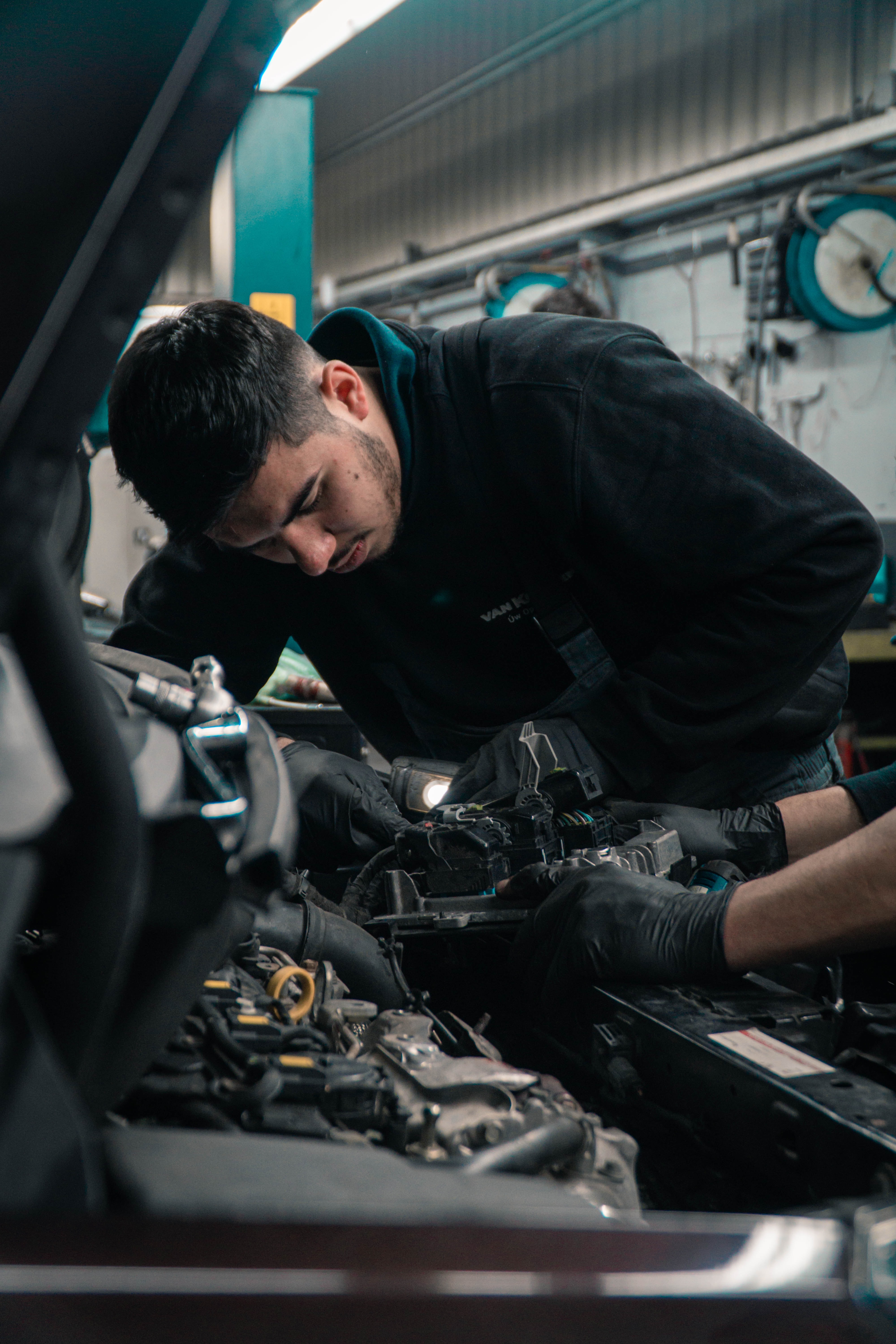
Still, electric cars are brimming with complicated structures, from computerized controls to regenerative braking systems, as well as many of the familiar parts you would expect to see on a car, such as tires, brake pads, and suspension bushings. An EV can even experience leaks, and all of the aforementioned items still need proper care.
What Maintenance Does An Electric Car Need?
Let’s begin by tackling the familiar items and go over what may be different for electric car maintenance vs. ICE maintenance:
The Battery
The primary difference when it comes to maintenance on electric cars is taking proper care of the battery. The bad news is that you can significantly shorten a battery’s lifespan through abusive practices, such as:
- Subjecting the battery to extreme temperatures: Intense heat or cold is harmful to batteries, and even with temperature regulation controls, harsh environments will take their toll.
- Constantly fast charging: Cramming power into a battery as fast as possible degrades it quicker than slow charging it at home.
- Full charges and total depletions: Bringing a battery up to 100% or down to 0% constantly will take years off its life. Manufacturers recommend a max of 90% charge in most circumstances.
The good news, though, is that as long as you refrain from these practices, your battery won’t need much attention. According to the National Renewable Energy Laboratory, today's EV batteries are projected to last 12 to 15 years in moderate climates.
In regions with extreme heat or cold, that lifespan can drop to between 8 and 12 years. This is why temperature management is one of the most critical aspects of maintenance on electric cars.
Tires
Tire wear is one area of EV maintenance that often surprises new owners. Electric cars eat up tires more quickly than traditional vehicles. They're almost universally heavier, thanks to their massive battery packs. Add in a speed-demon approach to driving, and all that electric torque will put even more strain on the rubber.
Brakes
Thanks to regenerative braking, EV brake pads and rotors actually wear at a slower rate than those on a gas-powered vehicle. The electric motor recaptures kinetic energy to slow the car, which reduces strain on the mechanical braking system.
That said, maintenance on electric cars still requires regular brake inspections. Brake fluid should be flushed every two to three years, and in areas with road salt, brake caliper lubrication is recommended roughly every 12 months or 12,500 miles since corrosion (not friction) is the bigger brake concern for most EV drivers.
Coolant
In an ICE-powered car, coolant keeps the engine from overheating. Some EVs also use coolants to lower temperatures for components that may experience high levels of heat, such as transmissions (where applicable), the regenerative braking system, and some driveline components.
Wipers
When it comes to electric car maintenance, this is no different than ICE-powered upkeep. Wipers and wiper fluid will need replacing, just as they always have.
Filters
The cabin air filter will still get clogged with debris and dirt, and needs to be changed as well.
12-Volt Battery
While the high-voltage traction battery powers the drivetrain, EVs also rely on a conventional 12-volt auxiliary battery to run accessories and low-voltage electronics. This battery requires periodic testing and eventual replacement (just as it does in a gas-powered car) and is easy to overlook as part of your regular EV maintenance routine.
Lubricant/Oil
There are still plenty of bearings and shafts spinning around in an EV, and they need lubrication to move freely and keep from overheating.
Suspension
Springs and shocks wear out, bushings crack, and ball joints loosen. When the miles pile up, the suspension will develop play and transmit more vibrations.
There may be other incidental items in an EV that may or may not be found in an old-fashioned ICE vehicle, such as motorized door handles, but these will be more model or manufacturer-specific.
How Much Is Maintenance on an Electric Car?
Reports indicate that an average gas car costs $949 in annual electric vehicle maintenance, while the average annual maintenance on electric cars is $619. In a five-year ownership period, that translates to about $3,000 vs. nearly $5,000 for the ICE-powered car.
Staying on top of electric car maintenance means following a consistent service schedule. Here's what a general electric vehicle maintenance timeline looks like:
- Every 5,000–7,500 miles: Tire rotation, brake inspection, cabin air filter check
- Every 2 years/20,000 miles: Replace cabin air filter, flush brake fluid
- Every 5 years/150,000 miles: Replace battery coolant
- Other routine items include fluid top-offs, lubrication of parts such as door locks, and an overall vehicle inspection at each visit
When it comes to EV maintenance on components like AC compressors, steering racks, and transmissions, prices will be similar to what you're used to in a gas-powered car.
By far, the most expensive item to replace on an EV, though, is the battery. Electric vehicle batteries are measured in kilowatt-hours (kWh), a measurement of their overall capacity. As such, bigger batteries with greater capacities will cost more to replace. Most manufacturers warranty their batteries for eight years or 100,000 miles, though that distance rises to 150,000 miles in a few locations, such as California.
As for the cost to replace the battery can cost up to $10,000 for a 65-kWh battery pack, which is not out of the ordinary. A smaller 40-kWh battery might be less, while a larger 82-kWh battery could be much more.
How Can You Save on Future Maintenance Costs?
Unfortunately, an EV’s battery will need replacement eventually, but you can still keep costs down in the meantime and squeak as many miles out of your battery as you can by taking proper care of it and avoiding the practices mentioned above.
As for standard wear and tear, you can extend the life of your tires with attentive and careful driving. Taking corners at high speeds and mashing the throttle may be exhilarating, but if you want your tires to last more than 30,000 miles, limit the lead-footing. Similarly, leaning on regenerative braking rather than mechanical brakes will preserve your pads and rotors, and is one of the easiest ways to reduce EV maintenance costs over time.
One last thing to note is that electric cars operate silently and swiftly, which can lull owners into a false sense of security. Nevertheless, electric car maintenance is still necessary. Fluids need changing, wipers need replacing, parts need lubricant, and so on. Get regular inspections on your car to identify if anything is wrong or out of spec. Prevention is the best medicine when it comes to EV maintenance.
The Difference Between Old and New Electric Cars
Even though electric vehicles are relatively new to the automotive landscape, they have been around long enough to experience large shifts in technology. Older EVs may not be able to fast charge, for example, and with Tesla’s charger infrastructure becoming the industry standard, those old EVs will be even less practical.
Additionally, whether an old EV has had its battery replaced or not, it won’t have the range of a modern EV. When you factor in the cost of maintenance on electric cars from an earlier era (including the potential need to replace an out-of-warranty battery) older EVs can end up being significantly more expensive to own.
If you’re looking for a bargain on an older EV, you’ll also have to accept outdated tech. It might not have many driver assist features, or any at all, and it might not have Android Auto or Apple CarPlay connectivity. Furthermore, given that so many of the car’s functions are computer-controlled, if the electronics develop software glitches or have any degradation or other damage, the car may not function properly, if at all.
Looking Ahead: Will Future Electric Cars Become Less Expensive to Maintain?
As carmakers continue the switch to making EVs, they’ll learn what works and what doesn’t, refining their designs to last longer, packaging features more efficiently, and increasing parts availability. Advances in technology (including self-driving capabilities) may also influence future electric vehicle maintenance needs, as automated systems could optimize braking and acceleration patterns to further reduce component wear.
The same increase in durability that occurred in gas-powered cars over the past 50 years, increasing maintenance intervals and making cars able to withstand harsh conditions, should occur in electric cars, as well, so it’s up to manufacturers to be willing to do so for consumers.
Protect Your EV With CarShield
Electric cars may come with lower maintenance costs, but a single unexpected repair can still set you back thousands of dollars. With an Electric Vehicle Coverage plan from CarShield, you can breathe easy should there be any issues with the battery, electrical system, or electric motor. Contact CarShield today to learn more and get a free quote today.