
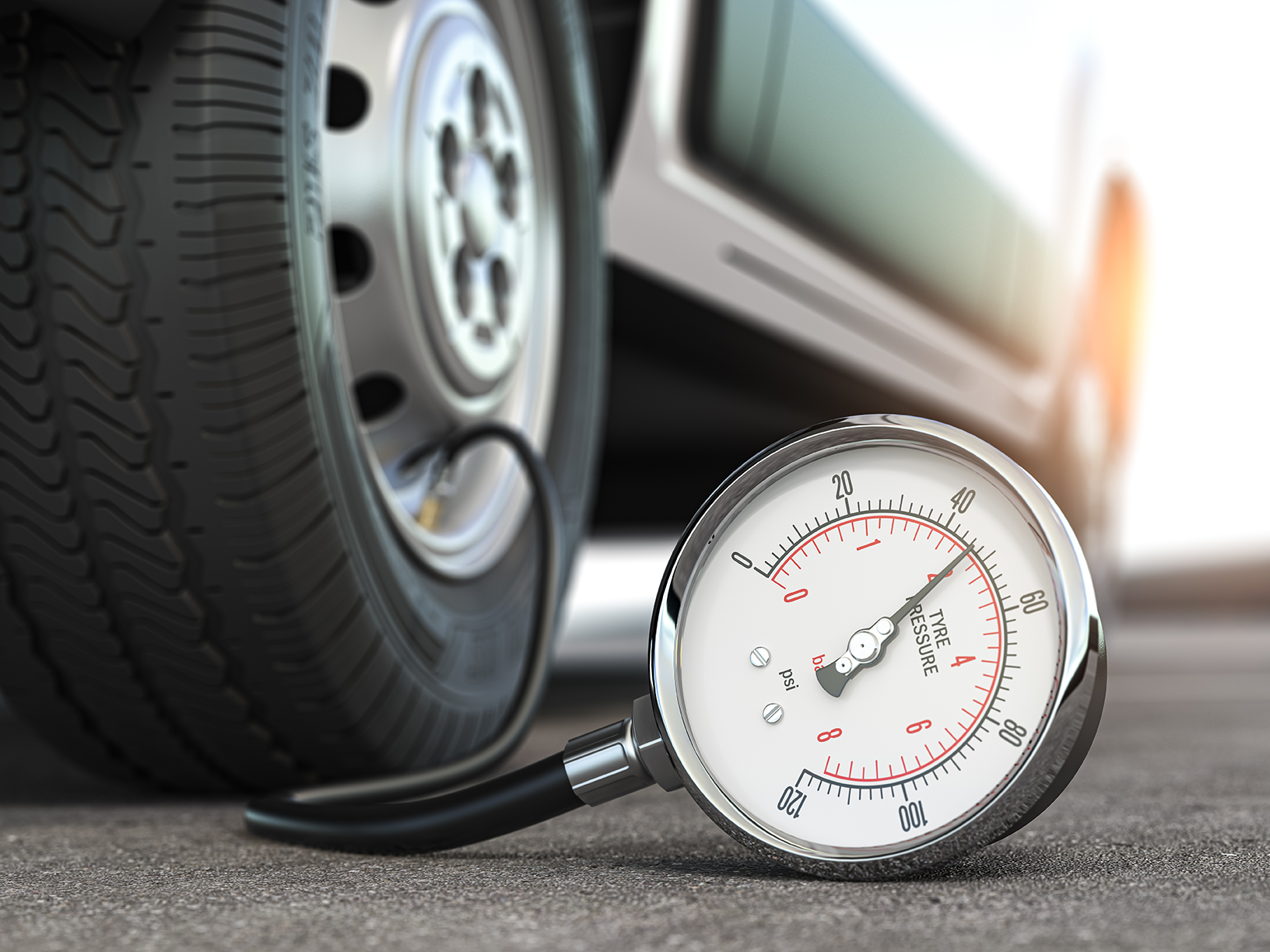
Most drivers know to check their oil and replace their wipers, but tire PSI often gets ignored until a warning light appears or a tire looks visibly flat. By then, the damage may already be done.
Understanding PSI tire pressure is simpler than it sounds, and getting it right improves fuel economy, extends tire life, and helps you avoid dangerous blowouts. It's a basic part of good car maintenance that every driver should know.
What Does PSI Stand For?
PSI stands for pounds per square inch, which is the unit used to measure air pressure inside your tire. Knowing the target PSI for car tires is one of the simplest things you can do to keep your vehicle running safely.
In practical terms, PSI for tires tells you how much air is supporting the weight of your car. You can check it with a tire pressure gauge, available at any auto parts store for around $10-$20. If you're not sure how tires fit into your vehicle's bigger picture, our basic car parts guide is a good place to start.
What PSI Should My Tires Be?
The normal PSI for tires is not a universal number. It actually depends on your specific vehicle.
Most tire PSI for passenger cars falls between 30–35 PSI, while SUVs and trucks typically run 35–40 PSI. Your manufacturer's recommended level is set based on your vehicle's weight, tire size, and intended use.
Always find your exact spec on the driver's side door jamb sticker or in your owner's manual rather than on the tire sidewall itself. That number reflects the tire's maximum load capacity, not what's right for your car.
Here are recommended PSI tire pressure levels for some of America's most popular vehicles (confirm with your door sticker, as these vary by year):
| Vehicle Make | Model | Recommended Tire PSI |
|---|---|---|
| Ford | F-Series | 35 PSI |
| Honda | Civic | 32 PSI |
| Chevrolet | Equinox | 35 PSI |
| Toyota | Corolla | 36 PSI |
| Toyota | RAV4 | 33 PSI |
| Nissan | Altima | 32 PSI |
Pair regular PSI checks with a full vehicle maintenance checklist to stay ahead of issues before they become expensive repairs.
Why Getting Tire PSI Right Actually Matters
Incorrect PSI tire pressure isn't just a minor inconvenience. It actually affects your safety, your wallet, and how long your tires last.
When Tires Are Underinflated
When PSI tire pressure drops too low, the tire's sidewall flexes more than it should, generating excess heat and wear. The consequences are:
- Reduced fuel economy (up to 0.2% lower gas mileage for every 1 psi drop, according to the U.S. Department of Energy)
- Longer stopping distances
- Sluggish, imprecise handling
- Accelerated sidewall wear and blowout risk
When Tires Are Overinflated
The best PSI for tires is always your manufacturer's spec, not more. Overinflated tires mean:
- A harsher ride and reduced traction
- Faster, uneven wear down the center tread
- Less responsive steering
How Temperature Changes Your PSI Tire Pressure
Here's something many drivers don't realize: tire pressure changes with the weather.
As a general rule, PSI for car tires drops by approximately 1 PSI for every 10-degree Fahrenheit drop in outside temperature. That means a tire that was properly inflated in October can be noticeably low by January without anyone touching it.
The National Highway Traffic Safety Administration (NHTSA) flags seasonal pressure loss as one of the most common causes of underinflated tires on the road.
Check your tires at the start of every season and before long road trips. Staying on top of this is one of the easiest ways to avoid unexpected costs, and keeping a handle on car payments starts with maintaining what you already own.
What PSI Is a Flat Tire?
A tire is typically considered flat when its pressure drops below 20 PSI. Most modern vehicles have a Tire Pressure Monitoring System (TPMS) that triggers a dashboard warning when PSI tire pressure falls roughly 25% below the recommended level, which is around 24–26 PSI for a tire spec'd at 32–35 PSI.
Never drive on a flat tire. Even a short distance can destroy the sidewall, turning a simple tire PSI top-up into a full replacement.
How to Check and Correct Your Tire PSI
Checking your tire PSI takes less than five minutes and requires only a basic pressure gauge. Here's how to do it right:
- Check when tires are cold before driving, ideally in the morning. Heat from driving temporarily raises the PSI reading.
- Remove the valve cap on the tire stem (the small rubber or metal nub on the wheel's inner edge).
- Press your gauge firmly onto the valve stem and hold for a reading.
- Compare it to the recommended tire PSI on your door jamb sticker.
- Add air if low at any gas station pump or with a portable inflator.
- Release air if high by pressing the small pin inside the valve stem.
- Check all four tires and your spare. Compact spares often require around 60 PSI, so don't skip it.
Aim to check your PSI for car tires once a month and before any road trip longer than an hour.
Tire Care Is Just One Part of the Picture
Staying on top of tire PSI is smart, but it won't protect you from unexpected mechanical failures under the hood. Engine problems, transmission failures, and electrical issues can arrive without warning. A major repair bill can easily run over $1,500.
A CarShield vehicle service contract helps cover those costs so you're not caught off guard. See how CarShield works, explore our protection plans, or get a free quote today.
No long-term commitment. Just reliable protection when you need it.